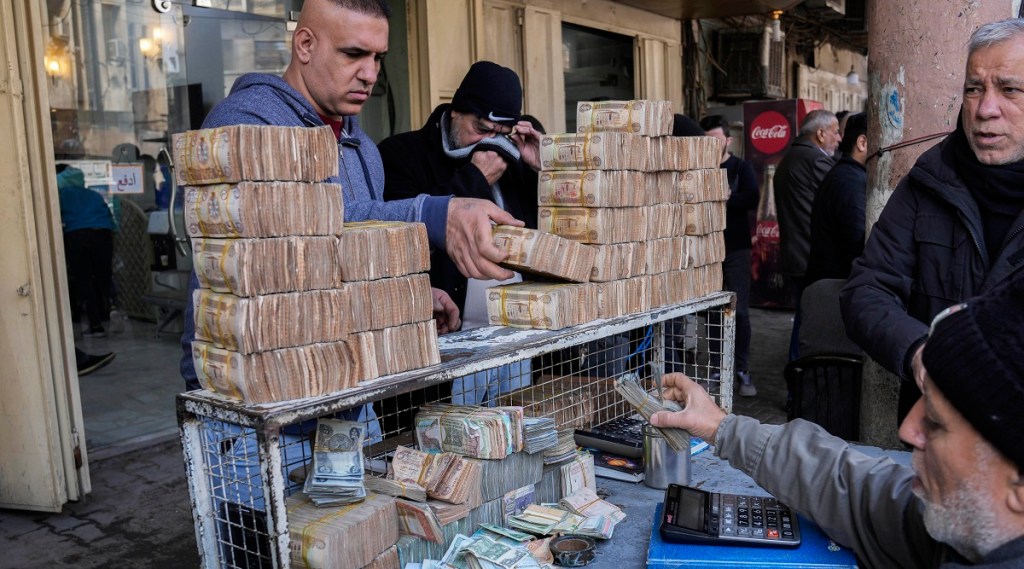
The Iraq dollar exchange showed a clear increase on Tuesday across key Iraqi cities, signaling renewed currency pressure. Initially, traders in Baghdad reported higher demand during early morning transactions. Soon after, exchange activity intensified at al-Kifah and al-Harithiya markets. Dealers raised selling prices as buyers entered the market aggressively. Consequently, the dollar reached 1,495 Iraqi dinars during peak trading hours. Earlier that morning, the rate stayed closer to 1,490 dinars.
As momentum built, exchange shops adjusted prices to reflect demand. Throughout Baghdad, dealers sold the dollar between 1,490 and 1,500 dinars. Therefore, customers paid more for foreign currency than the previous day. Meanwhile, Erbil followed the same upward direction without delay. Exchange shops in the Kurdistan capital reacted to regional price signals. The dollar traded between 1,500.5 and 1,501.5 dinars in local markets. As a result, traders confirmed similar trends across northern Iraq.
These movements connected closely to earlier policy changes by monetary authorities. In February 2023, the Central Bank of Iraq announced a revised official exchange rate. Officials set the rate at 1,300 dinars per dollar to stabilize markets. They aimed to curb speculation and restore confidence. Before this change, the official rate remained at 1,450 dinars. However, parallel markets sold the dollar near 1,550 dinars.
This pricing gap encouraged informal trading and reduced official market influence. Over time, currency pressure intensified despite regulatory efforts. During January 2023, the situation worsened considerably. Parallel market prices surged to nearly 1,610 dinars per dollar. Meanwhile, authorities maintained the same official rate. Therefore, the difference exceeded ten percent nationwide. This imbalance disrupted trade planning and increased import costs. Since then, officials expanded oversight and strengthened compliance measures. Banks also increased access to foreign currency transactions. Despite these actions, demand continued shaping daily pricing behavior.
Consequently, the Iraq dollar exchange remains sensitive to market sentiment. Analysts now monitor currency movement with heightened attention. They link price changes to imports, regional stability, and consumer demand. Additionally, seasonal spending influences dollar purchases across Iraq. Thus, exchange rates respond rapidly to economic signals. Looking ahead, observers expect continued fluctuations rather than sharp corrections. They anticipate gradual adjustments driven by policy enforcement. For now, traders and citizens watch exchange boards daily. Ultimately, the Iraq dollar exchange continues shaping Iraq’s financial outlook and market confidence.