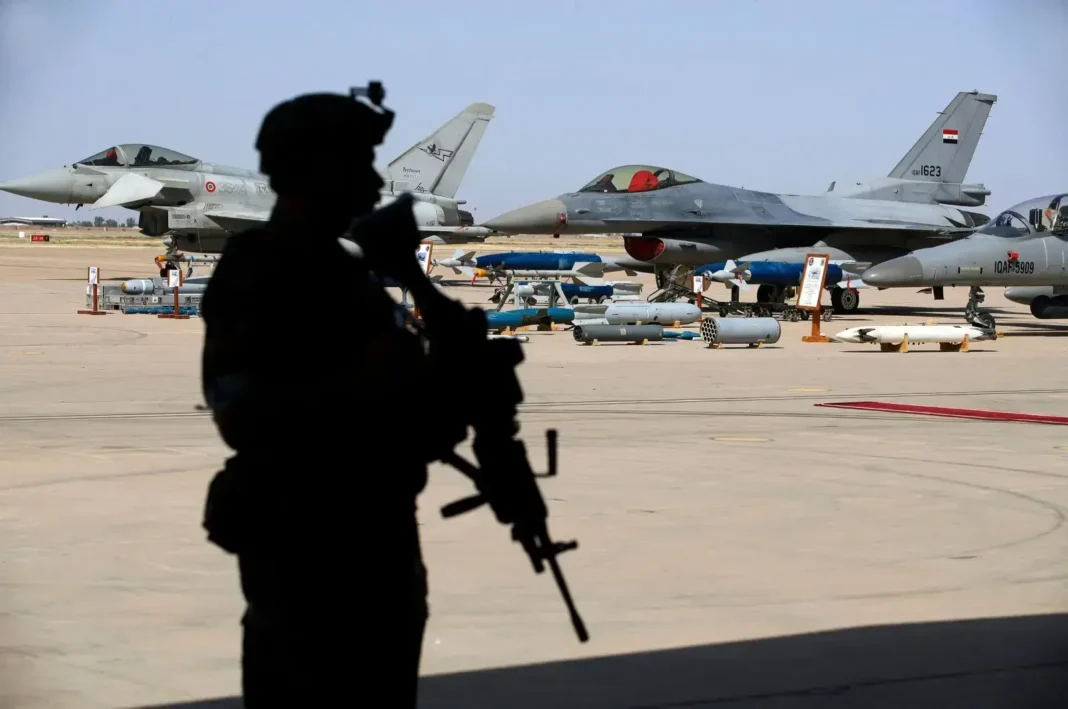
Iraq is accelerating Iraq’s air defense efforts with a tighter plan to protect its airspace, vital infrastructure and oil facilities, including strategic sites in the Kurdistan Region, amid rising regional tensions.
Sabah al-Numan, spokesperson for the commander-in-chief of the Iraqi Armed Forces, said the Air Defense Command has developed a comprehensive strategy to defend the country’s airspace and prevent indirect attacks. He said the plan also covers oil and other vital installations across Iraq, including facilities located in the Kurdistan Region.
According to al-Numan, the Air Defense Command now carries a major responsibility and has developed a clear operational vision. Meanwhile, the government has stepped up efforts to obtain modern systems capable of detecting and responding to threats from missiles and drones.
The push follows months of growing security concerns. Since fighting between the United States and Iran began in late February, Iraq has faced repeated violations of its airspace and attacks involving drones and missiles. Moreover, several incidents affected US military positions, Kurdish opposition groups in the Kurdistan Region and energy infrastructure.
As a result, some international energy companies suspended operations during periods of heightened insecurity. Therefore, Baghdad has increasingly focused on strengthening its ability to monitor and protect its airspace without relying heavily on external support.
Yahya Rasool, spokesperson for the Iraqi Ministry of Defense, said the ministry is working on contracts to acquire advanced air defense systems. He added that army leadership presented the modernization plan to Prime Minister Ali al-Zaidi during his visit to the Air Defense Command in August.
Al-Zaidi subsequently ordered officials to accelerate the process and seek reliable systems from recognized international suppliers. In addition, the government has reduced the timeline for its air defense development program from six years to three.
The original plan covered the period from 2026 to 2031. However, authorities now aim to complete the accelerated program within three years. Al-Numan said the commander-in-chief also ordered the creation of a dedicated fund to finance the sector while maintaining its technical and technological standards.
The modernization program includes medium- and long-range radar networks, missile systems and advanced command-and-control capabilities. Furthermore, authorities are coordinating with the Finance Ministry to secure the funding required for contracts with international suppliers.
The planned network will cover Iraqi territory, meaning the Kurdistan Region will also fall within its defensive scope. Protecting oil fields and other strategic infrastructure remains another major priority.
The urgency has increased as Baghdad prepares for the planned withdrawal of the US-led coalition from Iraq by the end of September. Consequently, Iraqi authorities face greater pressure to develop independent capabilities for monitoring and defending national airspace.
Against this backdrop, Iraq’s air defense modernization represents a broader effort to strengthen national sovereignty. The government also faces continuing security challenges linked to the wider US-Iran confrontation and attacks involving Iran-aligned armed groups.
With regional tensions remaining high, Baghdad now seeks to build Iraq’s air defense capabilities quickly while protecting critical infrastructure across the country.