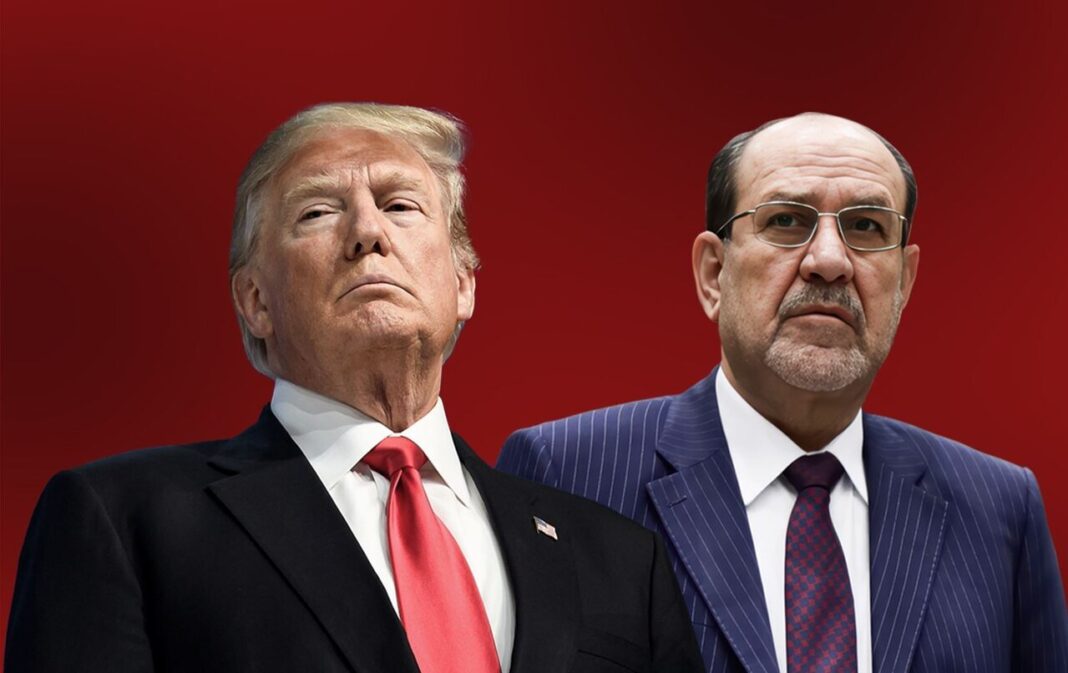
Former Iraqi Prime Minister Nouri al-Maliki challenged a public warning from U.S. President Donald Trump, saying Trump does not know him personally and blaming misinformation for the post. During a televised interview on Al Sharqiya, al-Maliki spoke for the first time since the Shiite Coordination Framework nominated him. Maliki said he heard about the tweet through indirect channels and that the message likely reached Trump through “informants” inside or outside Iraq.
“Does Trump know me to tweet about me?” he asked, then suggested that a misleading process shaped the message. Insisting that Trump lacked a personal connection to him. Trump posted his opposition on Feb. 1 after the Coordination Framework named al-Maliki as its candidate following the Nov. 11 elections. The bloc quickly rejected Trump’s stance, saying Iraq must choose its prime minister through constitutional procedures and that the decision belongs to the Iraqi majority.
Al-Maliki also rejected outside interference, saying foreign influence violates Iraq’s sovereignty. Moreover, he tried to calm Iraqis who fear economic sanctions, saying such warnings aim to intimidate, and he added that U.S. comments after the tweet did not feel harsh, describing them as measured. Al-Maliki claimed that three countries influenced the matter through reports and channels. Warning that his return could destabilize another state, and he said some people claimed Iraqis wrote the tweet, though he did not confirm or deny that claim.
Nevertheless, he said he still wants to work with Washington and reminded viewers that he signed the Strategic Framework Agreement with the United States. The agreement forms the basis of Iraqi-U.S. partnership.
He also described two visits from the U.S. charge d’affaires. He said the first visit delivered a clear message that Washington would not interfere in Iraq’s nomination process. As well as, the envoy repeated the message to other Coordination Framework members. After the tweet, the envoy returned, confirmed the message came from Trump, and said the decision reflected U.S. interests