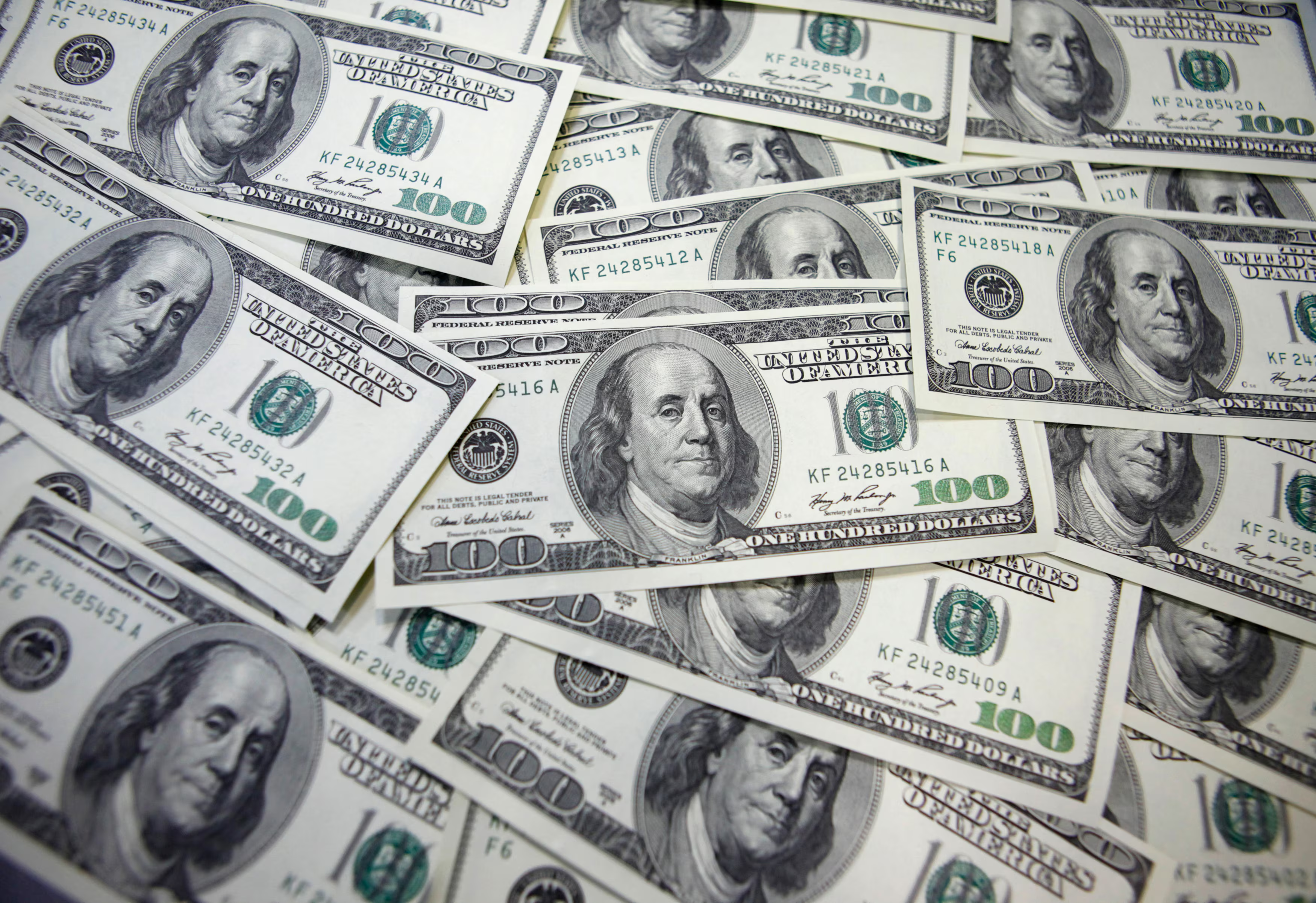
The U.S. dollar-Iraq exchange rate opened higher on Sunday across Iraq’s currency markets. Traders in Baghdad and Erbil recorded a noticeable upward shift in prices. Moreover, demand for foreign currency increased during early trading hours. In addition, exchange activity reflected cautious market sentiment across both cities.
In Baghdad, the U.S. dollar traded higher against the Iraqi dinar. Rates reached 153,600 dinars per 100 dollars. This level rose from the previous 152,900 dinars. Furthermore, traders at key exchanges reported stronger demand. As a result, the market showed steady upward movement.
Meanwhile, exchange shops in Baghdad adjusted their pricing quickly. Sellers offered 154,000 dinars per 100 dollars. At the same time, buyers set their level near 153,000 dinars. Moreover, the gap between buying and selling remained limited. Consequently, trading activity stayed active throughout the session.
In Erbil, the U.S. dollar also gained slightly in value. Selling prices reached 153,650 dinars per 100 dollars. At the same time, buying prices stood at 152,550 dinars. Furthermore, local dealers reported stable but firm demand. Therefore, Erbil followed Baghdad’s upward trend closely.
Additionally, market participants linked movements to regional demand patterns. Moreover, import-related payments added pressure on the currency supply. In addition, money flow between cities influenced daily pricing. As a result, both markets moved in a similar direction.
The U.S. dollar-Iraq exchange rate trends also reflected broader economic caution. Traders monitored external financial signals closely. Furthermore, small shifts in liquidity affected short-term pricing. Meanwhile, exchange offices adjusted rates to maintain balance. Consequently, volatility remained controlled but visible.
Overall, Iraq’s currency market showed a mild upward trend. Baghdad recorded slightly higher levels compared to earlier sessions. Similarly, Erbil followed with consistent movement. In addition, traders expect continued fluctuations in the upcoming days. Ultimately, the market remains sensitive to demand changes.