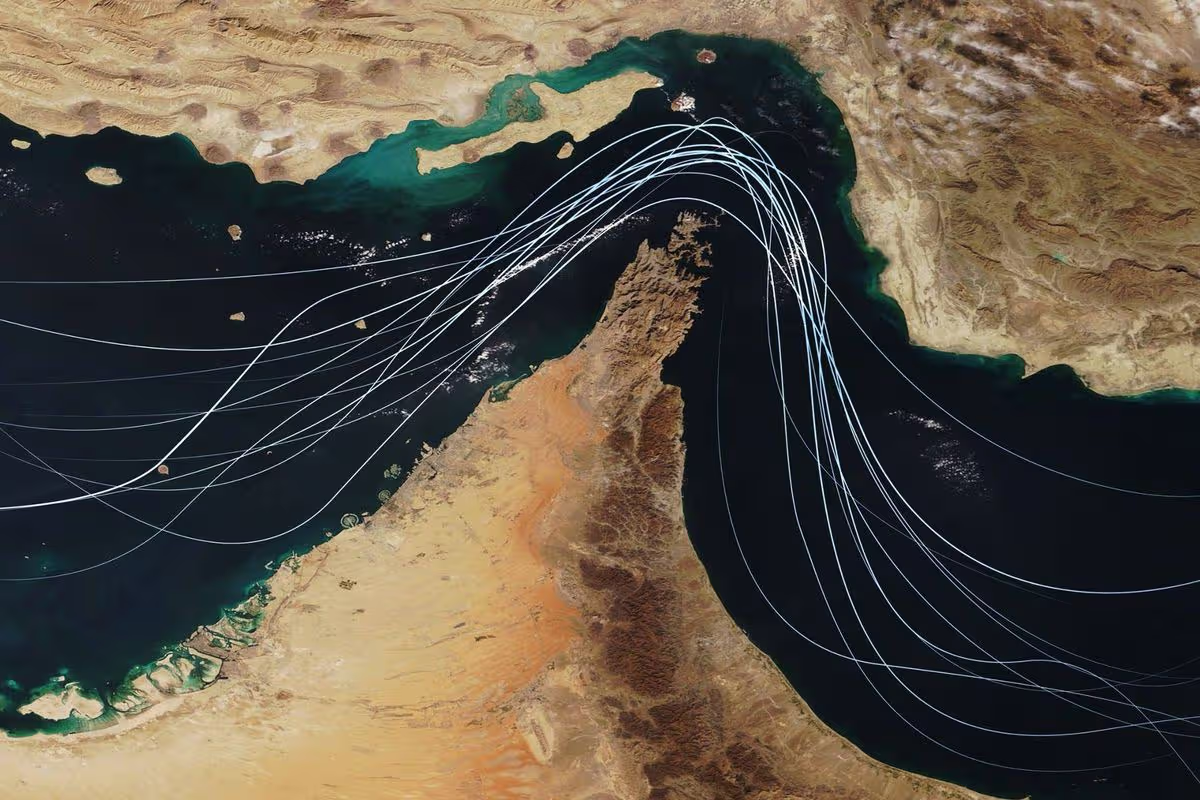
Strait of Hormuz oil transit increased as tankers moved large volumes of crude toward global markets on Sunday. Shipping data showed renewed activity after earlier disruptions. Moreover, energy traders monitored the route closely due to its global importance. In addition, recent political developments influenced shipping confidence across the region.
Tankers carried around two million barrels of Iraqi crude through the Strait. At the same time, vessels transported nearly four million barrels of Saudi oil. Consequently, total shipments exceeded six million barrels during the period. Furthermore, tracking data indicated that international routes continued to reopen gradually. As a result, energy flows showed signs of recovery.
Strait of Hormuz oil transit also reflected early stabilization during a temporary regional truce. Approximately twelve vessels passed through the waterway during the first two days. Meanwhile, analysts linked the movement to a U.S.-Iran ceasefire arrangement. In addition, shipping companies adjusted schedules to match reduced risk levels. Therefore, maritime traffic began to normalize slowly.
Earlier disruptions had sharply reduced oil activity in the region. The waterway had faced major interruptions after military strikes earlier in the year. Moreover, shipping uncertainty created delays for exporters and traders. Consequently, oil flows dropped significantly during the crisis period. However, recent developments encouraged partial recovery in transit volumes.
Strait of Hormuz oil transit remains critical for global energy markets. The passage handles a large share of worldwide oil shipments. Furthermore, even small disruptions affect global prices and supply chains. In addition, Iraq experienced a production decline during the earlier closure period. Output fell sharply, and exports also dropped significantly. As a result, regional economies felt strong pressure.
Political tensions also shaped market sentiment during this period. U.S. officials announced mine-clearing operations in the waterway. However, Iranian authorities rejected those claims and disputed the statements. Moreover, both sides exchanged contrasting views about maritime security. Consequently, uncertainty continued to influence shipping decisions.
Despite disagreements, traders observed a gradual improvement in movement. Shipping companies increased monitoring systems and adjusted routing strategies. Meanwhile, regional producers worked to restore stable export levels. In addition, global demand encouraged faster recovery in shipments. Ultimately, Strait of Hormuz oil transit continued to play a central role in global energy stability.