
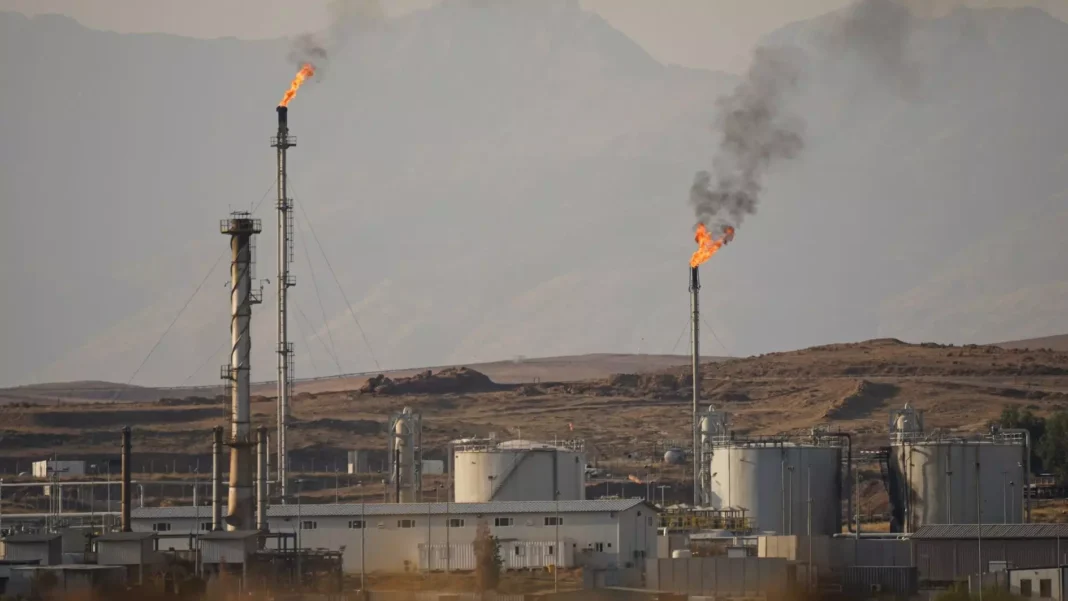
Hormuz closure risks billions in Iraq’s monthly oil revenue as tensions escalate in the Middle East. Experts warn that prolonged disruptions could force production cuts. Meanwhile, traders and policymakers closely monitor shipping routes and export levels.
Economic expert Mohammed Al-Hassani explained that Iraq exports between 3.3 and 3.5 million barrels of oil per day. Assuming an average price of $80 per barrel, the country could lose $260 million to $280 million daily. Therefore, monthly losses could exceed $8 billion.
Iraq relies heavily on southern export outlets managed by Basra Oil Company. These include storage and loading facilities in Al-Faw, Khor Al-Zubair, and Al-Zubair depots. Additional sites include Rumaila and West Qurna, which primarily regulate export flows rather than provide long-term storage. Consequently, Iraq’s flexibility to handle export disruptions remains limited.
The country produces over four million barrels daily, yet effective storage is insufficient. Tanks could fill within days if tankers cannot load oil. Unlike some Gulf producers, Iraq lacks overseas storage, which limits its ability to redirect supplies during crises. Therefore, southern export disruptions could have immediate financial impact.
Al-Hassani suggested an alternative northern route via Turkiye’s Ceyhan port, connected to North Oil Company operations. However, its capacity only compensates for a small fraction of southern exports. Meanwhile, Iraq continues to seek options to mitigate losses while navigating complex geopolitical risks.
Oil prices rose about 7%, reaching multi-month highs as tensions in the Strait of Hormuz persisted. The U.S.-Israeli conflict with Iran and disruptions to shipping increased concerns about supply bottlenecks. Consequently, regional and global markets reacted quickly, adjusting oil futures and trade positions.
On March 1, Iraq participated in an emergency OPEC+ meeting to discuss increasing production amid shipping challenges. Meanwhile, Iran’s army and the Islamic Revolutionary Guard Corps declared the Strait of Hormuz unsafe. Ships and tankers are avoiding the waterway, further escalating market uncertainty.
Overall, Hormuz closure risks show how geopolitical crises can threaten Iraq’s oil-dependent economy. Investors, policymakers, and traders now monitor developments closely. Consequently, timely decisions on exports and production will determine the country’s financial stability in the coming weeks.