The Iraqi newborn screening program now covers 98% of newborns, thanks to a new birth certificate rule. Health officials urge parents to test infants during the first weeks of life. Early detection prevents serious hereditary diseases and life-threatening complications.
Dr. Rajaa Saadoun, director of the program, told local media that parents must test newborns and receive results within 40 days. Delaying the test can lead to intellectual disability, kidney failure, liver cirrhosis, or even death.
The program tests infants for congenital hypothyroidism, milk protein intolerance, and lactose intolerance. These disorders can appear after the third day of breastfeeding, making early testing crucial.
The program began in 2017 but initially faced low participation. Dr. Saadoun explained that staff first recorded tests on paper and then switched to electronic records in early 2025. Officials expanded testing to Nineveh, Kirkuk, and Basra. Even then, parents rarely brought their children for screening.
Testing rates stayed around 45% until mid-2025. Then, the Health Ministry required families to complete screening before issuing birth certificates. After the rule, coverage jumped to 98%, and authorities identified 64 cases since last summer.
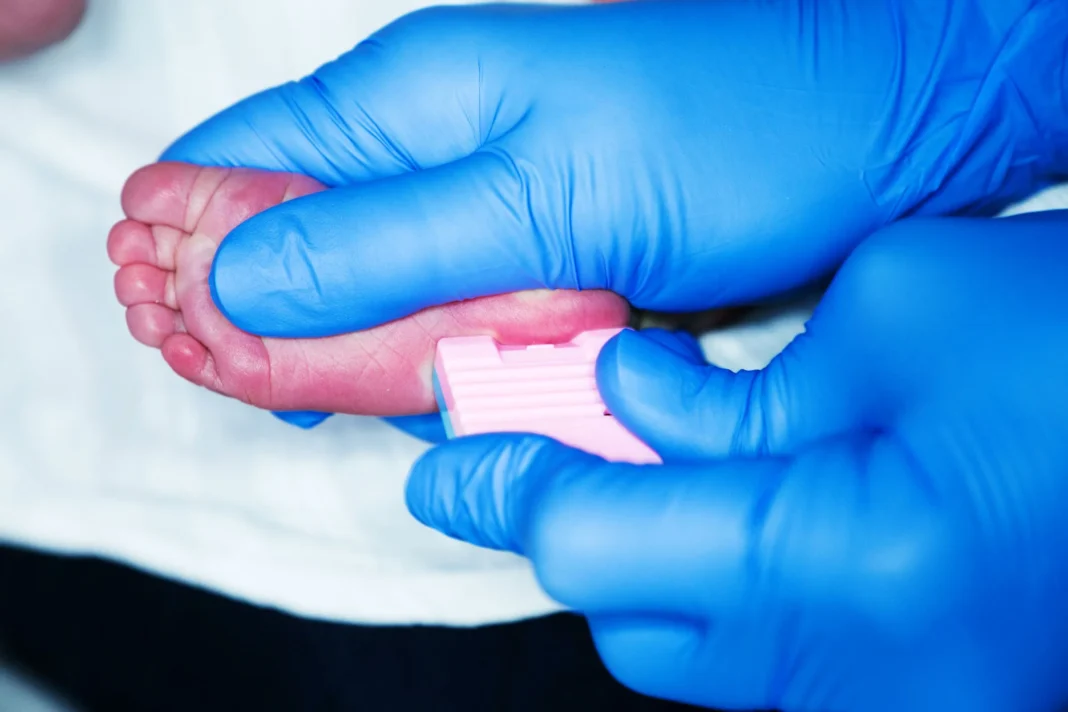
Staff collects four drops of blood from a newborn’s heel between the third and 42nd day. Nurses dry the blood on a card for three hours, then send it through local health centers to the governorate directorate. Finally, analysts in Baghdad examine the sample in the central lab.
The program identifies phenylketonuria, which can cause acid buildup, hair discoloration, and kidney or liver damage. Galactosemia can cause lethargy, blindness, organ failure, and death if untreated. Early detection allows doctors to treat these disorders before serious harm occurs.
Dr. Saadoun advised parents to screen infants during the first week of life. She said processing takes about two weeks because Baghdad holds the only government lab capable of accurate detection. The Health Ministry provides free testing and treatment, while private labs charge around 150,000 Iraqi dinars ($97).
Parents must test before the 42-day mark to prevent complications. Early detection remains the best way to safeguard infants’ health. The Iraqi newborn screening program shows how government action can protect children from preventable diseases.