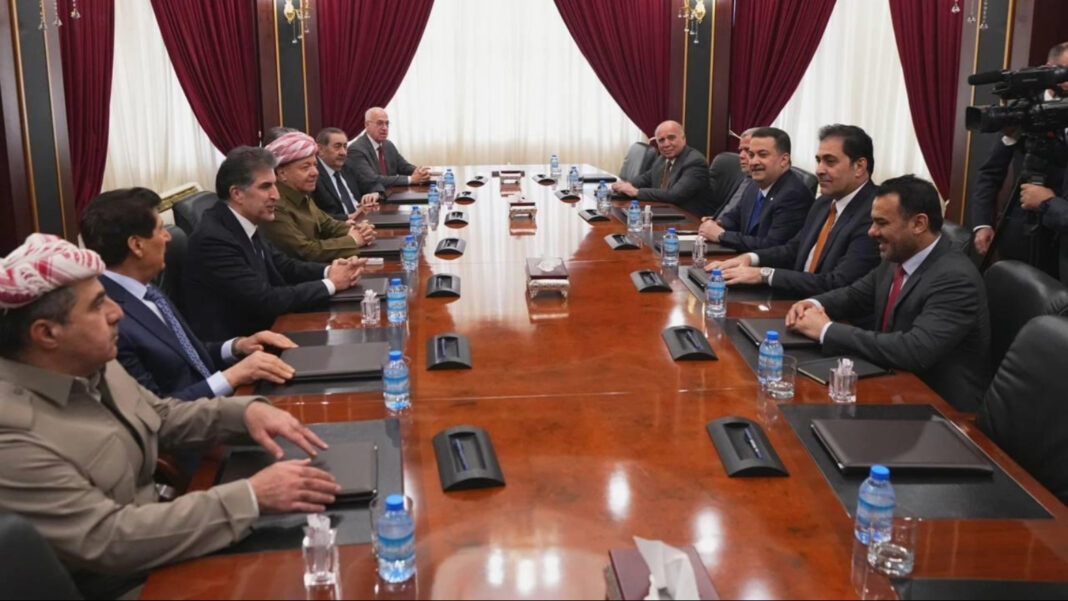
Iraq government formation remains the central focus of political discussions in Baghdad this week. Mohsen al-Mandalawi, head of the Al-Asas Coalition, met on Tuesday with a delegation from Nouri al-Maliki’s Islamic Dawa Party. The meeting took place at al-Mandalawi’s guesthouse, where leaders discussed electing a president and forming the next government. Al-Mandalawi emphasized that the discussions aimed to accelerate the political process.
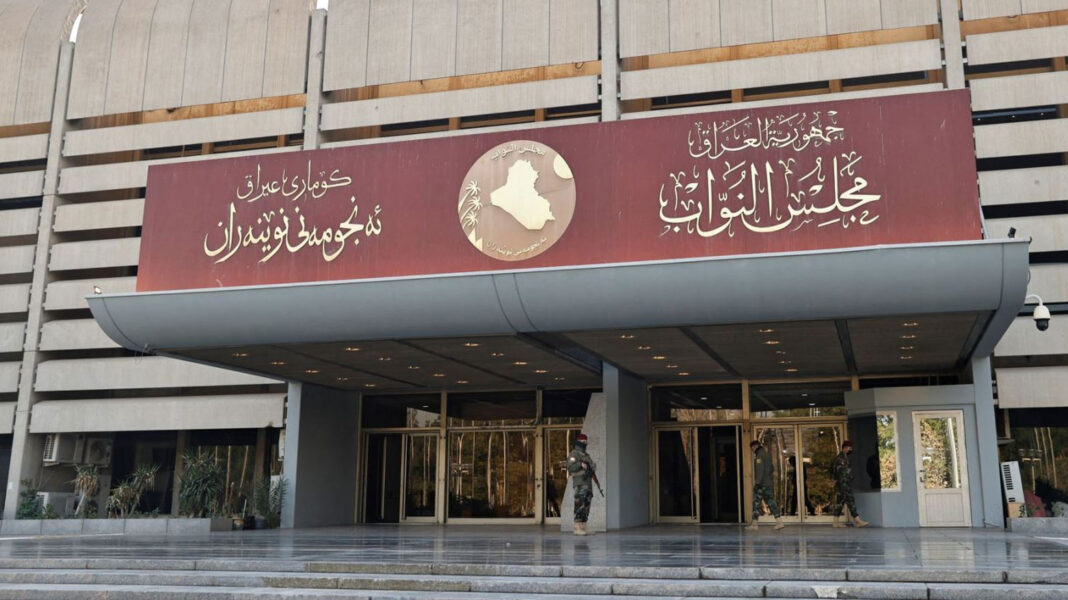
Iraq’s government formation has stalled since the 2025 parliamentary elections. According to the constitution, parliament must first elect a president. Once elected, the president nominates a prime minister to assemble a government. However, parliament postponed a scheduled session on Sunday to elect the president and did not set a new date. This delay continues to prolong the political deadlock.
During Tuesday’s meeting, al-Mandalawi and the Dawa delegation explored strategies to complete government formation requirements. They discussed ways to intensify political efforts and overcome current obstacles. Participants stressed that cooperation among political forces is essential for moving forward in a spirit of responsibility and partnership.
Leaders also highlighted the importance of adhering to constitutional procedures. They noted that following the law is key to ensuring stability. Additionally, they emphasized preserving the unity of the Coordination Framework, the Shiite coalition formed after the 2021 elections. Maintaining cohesion within the framework remains critical to advancing Iraq government formation.
Tensions have also emerged over the prime minister nomination. The Coordination Framework proposed Nouri al-Maliki, who previously served from 2006 to 2014. The nomination sparked debate domestically and drew international attention. Former U.S. President Donald Trump posted on social media that the United States might reconsider its support for Iraq if al-Maliki returned to office. Political observers say this statement could influence both internal discussions and foreign relations.
Observers note that Iraq government formation requires careful negotiation and broad consensus. Parties must balance competing interests while adhering to legal procedures. Political analysts warn that further delays could deepen public frustration and hinder urgent reforms. Meanwhile, leaders continue behind-the-scenes talks to find a compromise that allows the country to move forward.
As political actors meet and negotiate, Iraq faces pressure to resolve its leadership vacuum. Achieving consensus on the president and prime minister posts will determine the country’s stability and shape the next government’s ability to address ongoing economic and security challenges.