The Iraqi prime minister race entered a critical phase on Sunday as political factions increased negotiations. The Coordination Framework now faces growing pressure to finalize its candidate. Moreover, the Iraqi prime minister race has become the central focus of Iraq’s political landscape.
A senior member of the Coordination Framework confirmed that Nouri al-Maliki remains the only officially approved candidate. He explained that any replacement requires a formal written withdrawal. Therefore, this condition complicates efforts to introduce alternative names. As a result, internal discussions have become more complex.
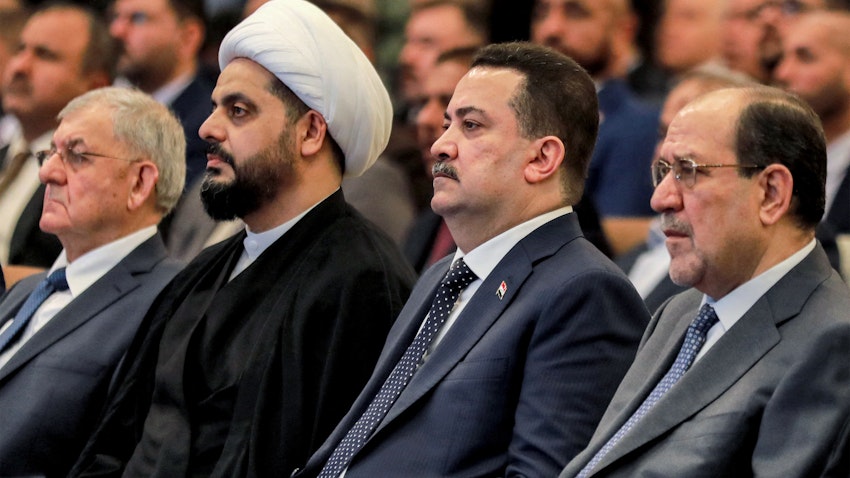
Meanwhile, political leaders prepared for a decisive meeting to resolve the issue. Ammar al-Hakim will host the gathering at his residence. During the session, leaders will review several potential candidates. Furthermore, they aim to establish a clear selection process. Consequently, the meeting could determine the next stage of negotiations.
Several prominent figures remain under consideration. These include Mohammed Shia al-Sudani and Haider al-Abadi. In addition, names such as Basim al-Badri and Mohsen al-Mandalawi have emerged. Intelligence chief Hamid al-Shatri also appears among the options. Moreover, other candidates include Mohammed Sahib al-Darraji, Ali Shukri, and Qassim al-Araji.
Despite the long list, no candidate currently leads the race. Political sources confirmed that factions remain divided over preferences. Some groups support experienced leadership figures. However, others advocate for new candidates to reduce tensions. Therefore, reaching consensus remains difficult.
At the same time, parliamentary pressure continues to increase. Haibet al-Halbousi has given the Coordination Framework a strict 15-day deadline. This timeline follows the inauguration of Nizar Amedi. Consequently, urgency now drives negotiations among political blocs.
In addition, leaders must balance competing interests within the coalition. Each faction seeks influence in the final decision. Meanwhile, ongoing disagreements slow progress toward unity. As a result, negotiations continue behind closed doors.
Furthermore, the political environment remains fluid. New names could still enter discussions if talks stall. However, leaders aim to avoid prolonged uncertainty. Therefore, they continue efforts to narrow the field.
Ultimately, the Iraqi prime minister race remains unresolved but highly active. Political leaders continue to negotiate under mounting pressure. Moreover, the outcome will shape Iraq’s political direction in the coming months. For now, all attention remains on the upcoming Coordination Framework meeting.