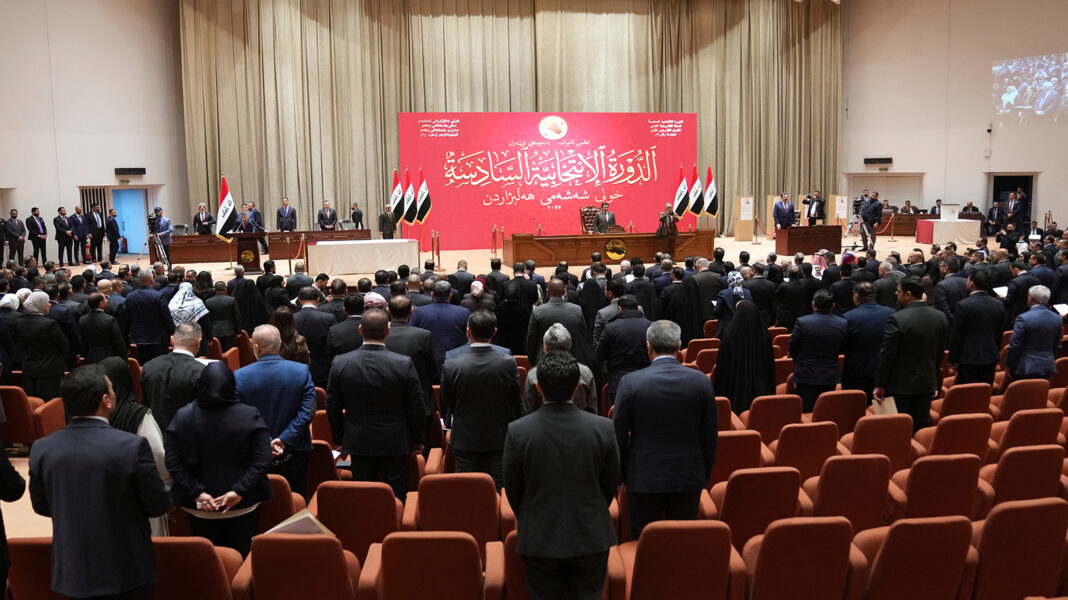
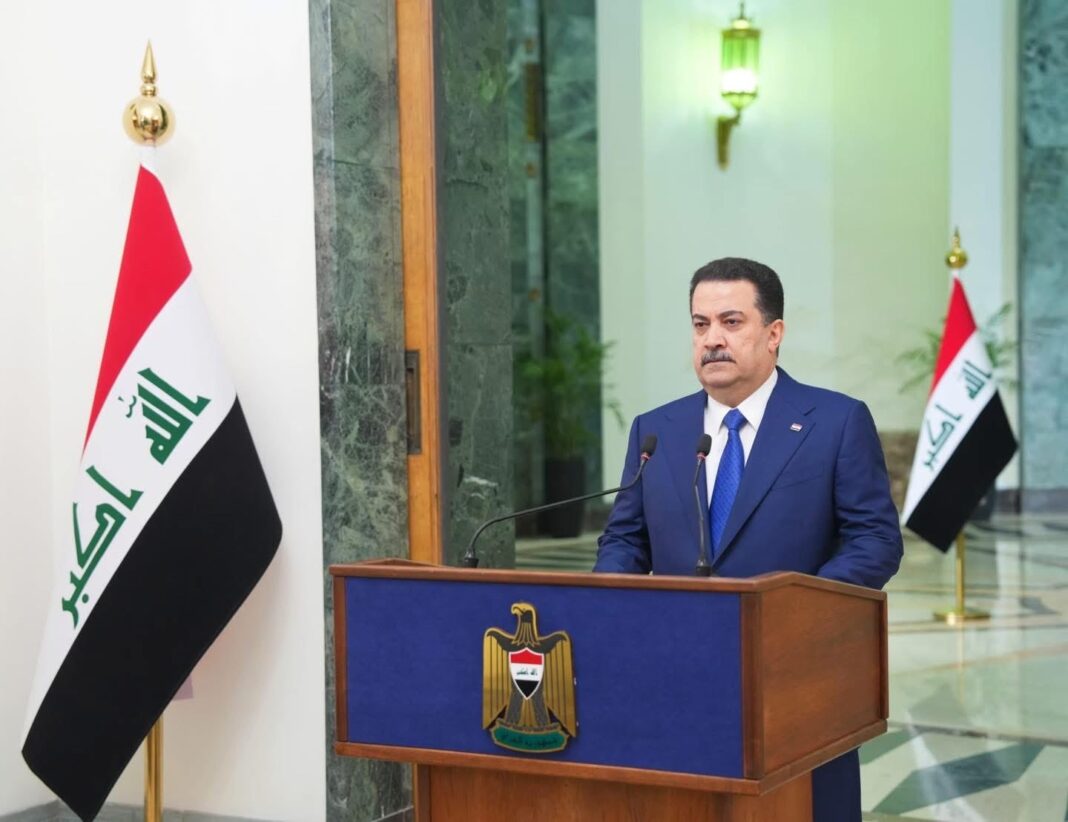
Iraq cabinet transition dominated political discussions on Wednesday after outgoing Prime Minister Mohammed Shia al-Sudani delivered his farewell speech ahead of a crucial parliamentary session. The address came one day before lawmakers prepared to vote on the incoming government of Prime Minister-designate Ali al-Zaidi.
Iraq’s parliament is expected to review Zaidi’s cabinet lineup and government program on Thursday. Political leaders continue negotiations as the country prepares for a major leadership change in Baghdad.
Sudani reflected on the difficult circumstances surrounding the beginning of his administration in October 2022. He said Iraq faced a dangerous political crisis after months of deadlock following the 2021 parliamentary elections.
At that time, political disagreements delayed the formation of a new government for nearly a year. Several parties failed to agree on leadership positions and ministerial portfolios.
Sudani eventually became the Coordination Framework’s candidate for prime minister. His government later faced rising tensions across the Middle East and major international developments.
During his speech, Sudani stressed that his administration worked to keep Iraq stable during regional conflicts. He said officials focused on protecting Iraq from violence and political escalation in neighboring countries.
Furthermore, Sudani defended his government’s balanced foreign policy during periods of instability involving Iran, Israel, and the United States. He argued that Iraq avoided deeper involvement in regional confrontations despite mounting pressure.
At the same time, Sudani highlighted several economic and infrastructure achievements under his leadership. He said Iraq completed nearly 1,000 kilometers of external roads during his administration.
In addition, the government paved around 130 million square meters of streets across Iraqi cities. Sudani described those projects as part of broader redevelopment plans aimed at modernizing public infrastructure.
He also pointed to growing foreign investment during his term in office. According to Sudani, Iraq secured more than 114 billion dollars in investments across several sectors.
Moreover, Iraq signed major agreements with international energy companies, including BP, Total, Chevron, ExxonMobil, and Halliburton. Sudani said those partnerships strengthened Iraq’s energy sector and boosted economic growth.
The outgoing prime minister also highlighted increased refining capacity inside Iraq. He explained that Iraqi refineries expanded production from 600,000 barrels per day in 2022 to nearly 1.2 million barrels in 2026.
Meanwhile, Iraq cabinet transition negotiations continue inside parliament ahead of Thursday’s vote. Political factions still discuss cabinet positions and government priorities behind closed doors.
Ali al-Zaidi received the Coordination Framework’s nomination for prime minister in late April. Soon afterward, President Nizar Amedi tasked him with forming a government within 30 days under the Iraqi constitution.
Since then, Zaidi has held consultations with major political blocs and party leaders. Those discussions focused heavily on power-sharing agreements and ministerial allocations.
Sudani concluded his farewell speech by expressing support for the next administration. He said he hopes the incoming government continues efforts to strengthen Iraq’s economy and maintain political stability.
As parliament prepares for the decisive session, the Iraq cabinet transition remains the dominant issue across Iraq’s political landscape. Many Iraqis now wait to see whether lawmakers will approve Zaidi’s cabinet without further delays.