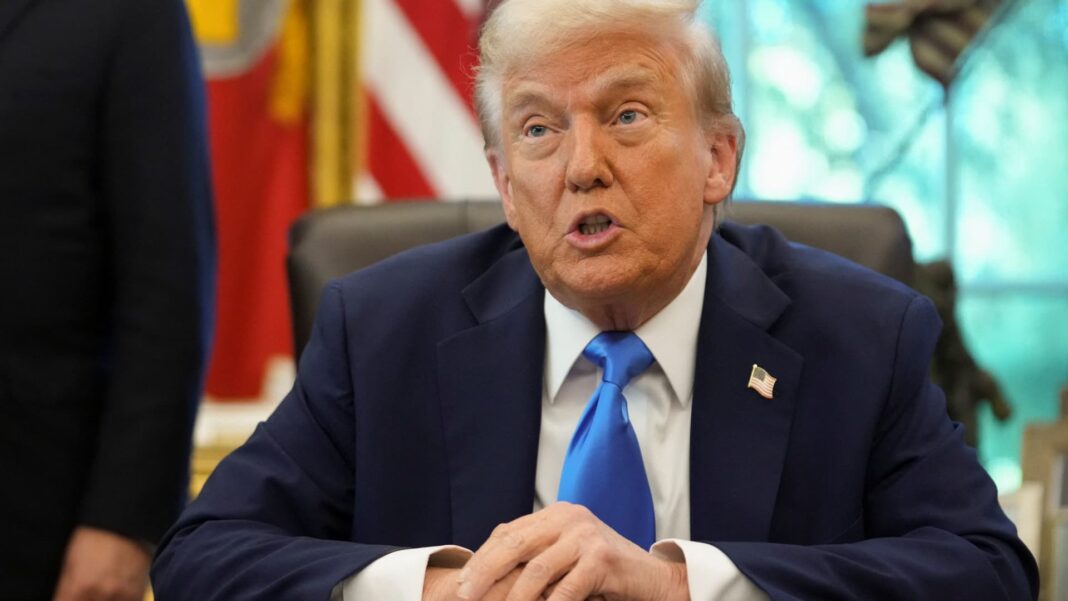
Oil prices retreat sharply on Tuesday following comments by Donald Trump suggesting a possible end to the Middle East conflict. Traders reacted quickly, as oil prices retreat eased fears of prolonged global supply disruptions.
Brent crude futures fell $4.17, or 4.2%, reaching $94.79 per barrel early Tuesday. Meanwhile, U.S. West Texas Intermediate (WTI) declined $3.81, or 4%, to $90.96 per barrel. Both benchmarks had earlier fallen as much as 11% before recovering slightly.
The sharp pullback followed Monday’s surge, when Brent and WTI crossed $100 per barrel for the first time since mid-2022. That jump reflected supply cuts from Saudi Arabia and other producers amid the expanding U.S.-Israeli conflict with Iran. Markets feared prolonged disruptions to oil exports from the region.
The retreat came after Russian President Vladimir Putin spoke with Trump, sharing proposals for a quick settlement. Traders interpreted the conversation as a potential step toward de-escalation, reducing immediate risk concerns.
Trump also stated in a CBS News interview that the war against Iran could end sooner than expected. He added that U.S. forces were ahead of the initial four- to five-week plan, calming speculative pressure in oil markets.
Analysts noted the market initially overreacted to both the surge and the pullback. Suvro Sarkar from DBS Bank said the market underestimates risks at these levels. He highlighted that Middle Eastern grades like Murban and Dubai remain above $100 per barrel.
Meanwhile, Iran’s Islamic Revolutionary Guards Corps emphasized that they would “determine the end of the war.” Officials warned they would block oil exports if attacks continued, highlighting ongoing geopolitical risks.
Additional factors influenced the price retreat. Traders considered potential U.S. measures, including easing sanctions on Russian oil and releasing emergency crude reserves. Analysts, such as Priyanka Sachdeva, pointed out that these moves signal continued supply to the market.
As a result, the initial “panic premium” that pushed oil above $100 faded quickly. Investors adjusted expectations, realizing that strategic reserves and international supply routes could stabilize markets.
Despite the retreat, oil prices remain volatile. Markets will continue watching regional tensions, production levels, and policy decisions closely. Analysts expect short-term swings to persist.