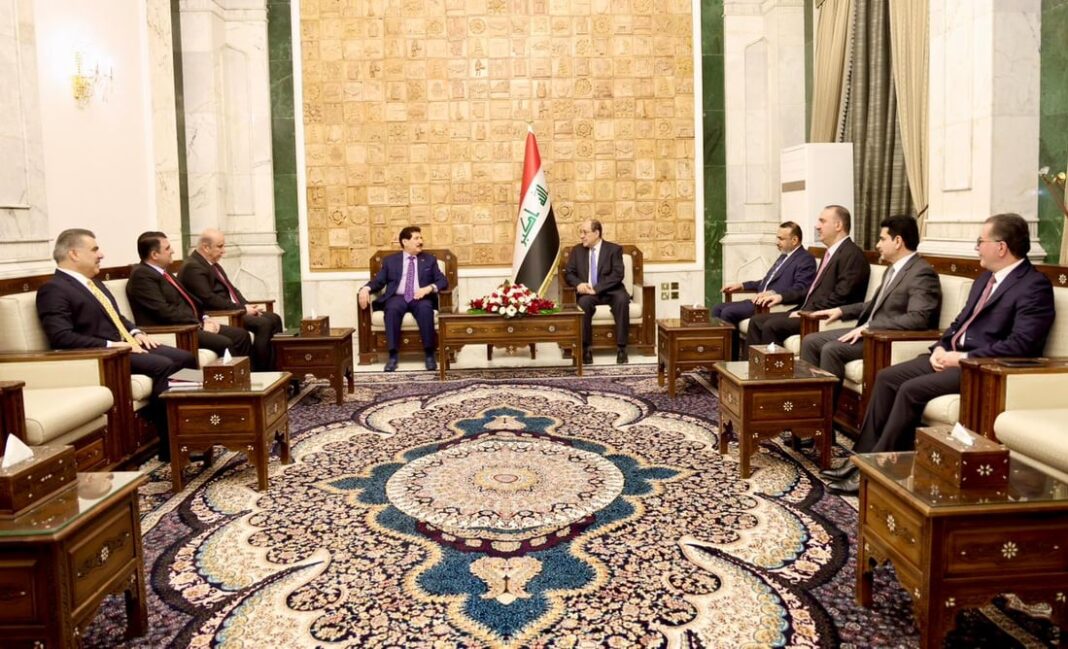
Iraq government formation talks moved forward Tuesday as senior political leaders met in Baghdad. Nouri al-Maliki led the State of Law Coalition during the meeting. He welcomed a Kurdistan Democratic Party delegation led by Fazil Mirani. The talks followed Iraq’s November 11 parliamentary elections. Therefore, political momentum increased across major blocs.
Both sides focused on the broader political situation across the country. They reviewed ongoing negotiations aimed at forming a new government. According to Maliki’s media office, leaders stressed continued dialogue. They also emphasized faster progress through cooperation. As a result, participants reaffirmed their commitment to consultation.
Moreover, leaders highlighted the need to respect constitutional entitlements. They also stressed adherence to established political timelines. These timelines guide the post-election process. Consequently, leaders warned against unnecessary delays. They agreed that delays could undermine public confidence.
In addition, the discussions addressed mechanisms for forming Iraq’s top leadership positions. Leaders examined practical steps for selecting the three presidencies. These roles include the republic presidency, the prime ministership, and the parliamentary speakership. They focused on balance among political forces. They also promoted national consensus.
Meanwhile, Iraq government formation talks unfolded as parliament prepared to convene. Iraq’s president officially called the new Council of Representatives to meet on December 29. This call followed legal ratification of the election results. The Federal Supreme Court completed the process earlier. Therefore, constitutional procedures moved into their next phase.
The Independent High Electoral Commission clarified arrangements for the opening session. Amer al-Fayez will chair the first meeting. He holds this role as the oldest elected lawmaker. He represents Basra in southern Iraq. This tradition ensures order during the opening session.
However, political leaders still face significant challenges. Parties must finalize power-sharing agreements. They must also address economic and security priorities. Additionally, they must respond to public demands for reform. Consequently, negotiations will likely intensify.
Observers continue to monitor Iraq government formation talks closely. Many expect increased activity before the parliamentary session begins. Leaders understand the urgency created by public expectations. Citizens want stability after months of uncertainty. Therefore, dialogue remains essential.
Furthermore, Maliki and Mirani emphasized cooperation between Baghdad and Erbil. They promoted dialogue as the preferred path forward. They rejected political escalation and deadlock. Instead, they supported consensus-driven solutions.
Officials also encouraged citizens to follow verified updates. Users can scan a QR code for official information. Government updates remain available through the App Store. The same services appear on Google Play. These tools help citizens track political developments.
In conclusion, Iraq government formation talks signal renewed efforts toward political agreement. Leaders framed cooperation as a national responsibility. The coming weeks will shape Iraq’s governance. Many Iraqis now await concrete results